Start with trustworthy inputs
Collect the brief, a measured room record, retained furniture dimensions, and known constraints. Record uncertainty rather than drawing around guessed dimensions. A precise-looking plan based on an unverified opening position can still mislead the next person.
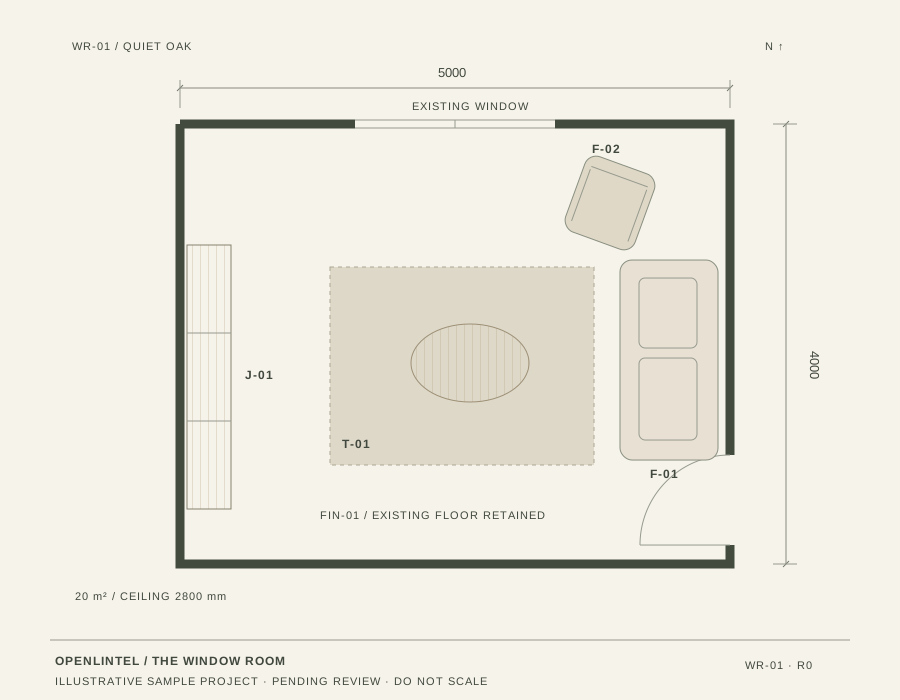
The Window Room is a nominal 5000 × 4000 mm study with a 2800 mm ceiling. These dimensions explain the example; they are not a measured site record. Keep that distinction when adapting its workflow.
Map activities before objects
List activities and their relationships: which should connect, which need separation, and which compete for the same area. In this sample, reading relates to the window corner, conversation to F-01 and F-02, and storage to the west-wall J-01 concept.
Use simple zones before detailed furniture. A zone identifies an intended use, not a guaranteed clearance. Test the actual furniture envelope, operation, and access needs when verified dimensions are available.
Check movement and operation
Trace routes between the entrance and each activity. Examine door operation, furniture use, access to storage, and the effect of people using the room at the same time. Draw the operating condition as well as the tidy presentation condition.
- Check retained openings against the survey.
- Use the selected product’s dimensions, not a visually similar symbol.
- Record pinch points and unresolved access needs.
- Refer project-specific accessibility, egress, and technical requirements to the appropriate professionals; this guide sets no universal minimum clearances.
Coordinate the plan with other records
Every significant selection should have a reference that leads somewhere: F-01 to its specification, J-01 to its elevation, and FIN-01 to the finish record. Compare these records when a selection changes.
WR-01 illustrates the relationships, while WR-02 studies the joinery. Neither is construction-ready. The useful lesson is the connection between documents, not an invitation to scale the illustration or build from it.
Test a selection change against the plan
When a product changes, a familiar symbol can conceal a different physical envelope. Keep the proposed item and its verified dimensions traceable. Do not preserve a pleasing layout by quietly scaling a generic furniture symbol to fit.
| Situation or reference | Useful record or next action |
|---|---|
| F-01 replacement proposed | Obtain candidate dimensions and review the seating relationship. |
| F-02 position reviewed | Check the actual use and movement relationship, not a universal clearance from this guide. |
| J-01 dimensions developed | Reconcile room sources, the plan, and elevation; sample dimensions remain nominal. |
Before you move on
- Are dimensions sourced and uncertainties marked?
- Have movement, use, and operation been considered?
- Do product and drawing references agree across the package?
About this resource
Authored by OpenLintel with AI assistance. Examples are illustrative and have not received independent professional review. Adapt the structure to your practice and verify project-specific information. No legal agreement, regulatory compliance, or construction readiness is represented.
See the information connect
Follow the corresponding chapter of The Window Room: one illustrative brief, one selected direction, and coordinated sample references.
Explore the sample drawingsDiscuss your studio’s workflow
Does this step lose information when your team moves to the next document? Discuss the coordination problem in a pilot discovery conversation. OpenLintel is in active development; this is not a hosted trial.
Request a pilot discovery conversation