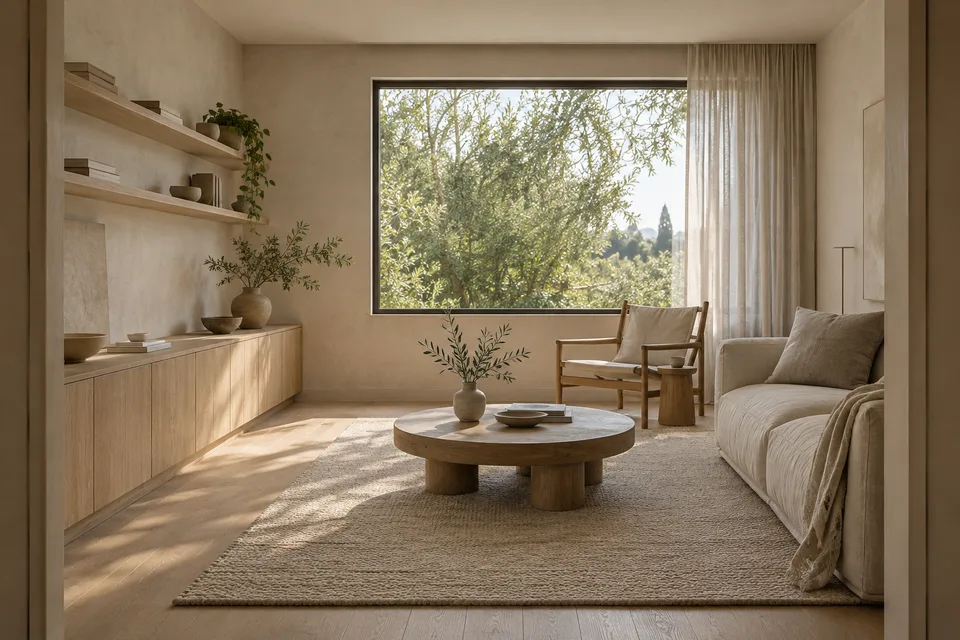
Retain the floor and openings. Connect reading, conversation, and storage. Develop Quiet Oak; keep Deep Olive identifiable as an alternative.
Write the idea before choosing the images
Start with the brief: who uses the space, what they need to do, and what must remain. Then write one sentence explaining the proposed response. For The Window Room, the idea is to connect reading, gathering, and storage while allowing the existing light and floor to lead.
The board should make that statement understandable. Include only the references needed to explain the proposed relationships: a layout sketch for activity, a room study for atmosphere, and material notes for continuity.
Concept, mood, and material boards have different jobs
Practices use these names differently, so state the purpose of the document you are presenting. In this library, a concept board explains the organizing idea; a mood board explores atmosphere; a material board identifies proposed surfaces and finishes.
One presentation can contain all three, but their review questions should remain distinct. Agreement that a room should feel calm is not confirmation of a particular fabric, joinery construction, or supplier.
A concept structure for The Window Room
The sample keeps the openings and existing oak floor. Reading is associated with the window corner, conversation with the seating group, and storage with J-01. Quiet Oak supplies the selected material direction; the plan and elevation make parts of that intent readable.
This is an illustrative design narrative, not a validated space plan. Its purpose is to demonstrate how a broad aim can connect to specific references while uncertainties remain explicit.
- Brief: combine reading, conversation, and storage.
- Constraint: retain floor and opening positions.
- Response: relate furniture and storage to the room’s existing qualities.
- Review: confirm the direction before developing verified project details.
Ask for feedback at the right level
Invite the client to respond to the proposed idea and priorities first. If the discussion jumps to a specific product, record it without letting an unverified choice quietly become the concept’s foundation.
Finish the review with a short decision note: what is selected, what needs another study, and what information is required next. Use the presentation storyboard to keep that request visible.
Separate the design argument from the next information request
For each part of the idea, explain which requirement it serves and what it leaves undecided. This allows the concept discussion to progress without disguising uncertainty. A future product change may leave the organizing idea intact.
| Situation or reference | Useful record or next action |
|---|---|
| Reading near the window | An activity relationship; actual use, light, and furniture requirements still need review. |
| Conversation seating | A purpose for F-01 and F-02, not confirmed sofa or chair products. |
| J-01 storage | A proposed response to the brief, not a verified joinery design. |
Before you move on
- Does the board explain one clear idea?
- Is that idea connected to needs and constraints?
- Are the next decisions and unresolved details explicit?
About this resource
Authored by OpenLintel with AI assistance. Examples are illustrative and have not received independent professional review. Adapt the structure to your practice and verify project-specific information. No legal agreement, regulatory compliance, or construction readiness is represented.
See the information connect
Follow the corresponding chapter of The Window Room: one illustrative brief, one selected direction, and coordinated sample references.
Explore the sample designDiscuss your studio’s workflow
Does this step lose information when your team moves to the next document? Discuss the coordination problem in a pilot discovery conversation. OpenLintel is in active development; this is not a hosted trial.
Request a pilot discovery conversation