Start with a need, not a row of products
The Window Room brief calls for reading, conversation, and storage while retaining the floor and openings. These requirements do not prescribe an exact sofa, joinery construction, or wall coating. They explain why information will be needed and what a later choice should serve.
Use the questionnaire to collect perspectives and the brief to record agreed intent. A drawing locates relationships. A specification records an item’s sourced attributes. Schedules organize placement, quantities, or surface assignments. These are the library’s conventions; agree the roles with your actual project team.
Trace three different kinds of information
Keep identifiers stable enough that another person can follow the chain. The table follows the original illustrative fixture; it adds no real client decision, measured quantity, or supplier evidence. Notice that some cells should remain unresolved.
| Brief requirement | Reference and drawing relationship | Record that owns the detail | Open question |
|---|---|---|---|
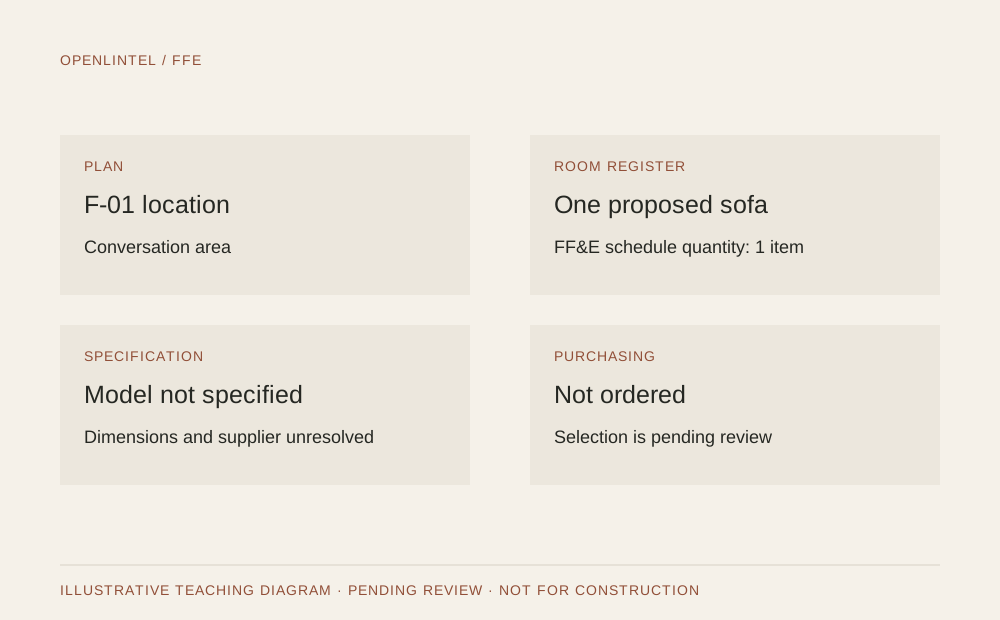
| Conversation | F-01 seating position in WR-01. | Specification: product identity. FF&E: one proposed item. | Final model, dimensions, supplier, and fabric. |
| Storage | J-01 in WR-01 and the WR-02 elevation. | Joinery drawing and specification, linked by J-01. | Site dimensions, construction details, responsible maker and reviewer. |
| Selected material direction | FIN-02 proposed wall treatment. | Finish schedule: surface assignment. Specification: actual product when selected. | Wall area, substrate, exact product, and preparation requirements. |
Test the chain with one proposed change
Imagine the proposed F-01 sofa changes. Begin in the product record, then review the plan, quantity register, budget, and timing. The brief may stay the same: the room still needs conversation seating. A product change and a brief change are different events even when both require review.
Document which records changed and which were checked but remained unchanged. Preserve the previous issue and identify the current coordinated set. This is a manual teaching workflow, not a claim that OpenLintel already synchronizes those records automatically.
Before you move on
- Does each requirement connect to a relevant record without prematurely specifying a product?
- Is the authoritative source for each fact identifiable?
- Could a colleague trace a change through the affected records and find the unresolved work?
About this resource
Authored by OpenLintel with AI assistance. Examples are illustrative and have not received independent professional review. Adapt the structure to your practice and verify project-specific information. No legal agreement, regulatory compliance, or construction readiness is represented.
See the information connect
Follow the corresponding chapter of The Window Room: one illustrative brief, one selected direction, and coordinated sample references.
Explore the sample materialsDiscuss your studio’s workflow
If brief decisions are repeatedly re-entered across drawings and schedules, discuss the record chain and where it breaks in a pilot discovery conversation.
Request a pilot discovery conversation