Define the boundary for your project
The exact boundary varies with the practice, project, and agreement. Do not assume that a familiar acronym settles who specifies, purchases, or installs every item. Agree a classification and responsibilities before assembling the register.
This library uses the FF&E schedule for the sofa F-01, reading chair F-02, and loose rug T-01. Retained flooring FIN-01 belongs in the finish schedule; built-in J-01 joinery is developed through its drawing and specification. This is an explicit teaching convention, not a universal legal or accounting definition.
A schedule and a specification answer different questions
The schedule answers where an item belongs and how many are proposed. The product specification answers what the item is: identity, size, finish, source, and review status. A stable reference links the two.
Avoid repeating uncertain product information in several places without a clear source. If a model changes, update the specification and review its impact on quantities, layout, budget, and timing.
Read one item across the sample
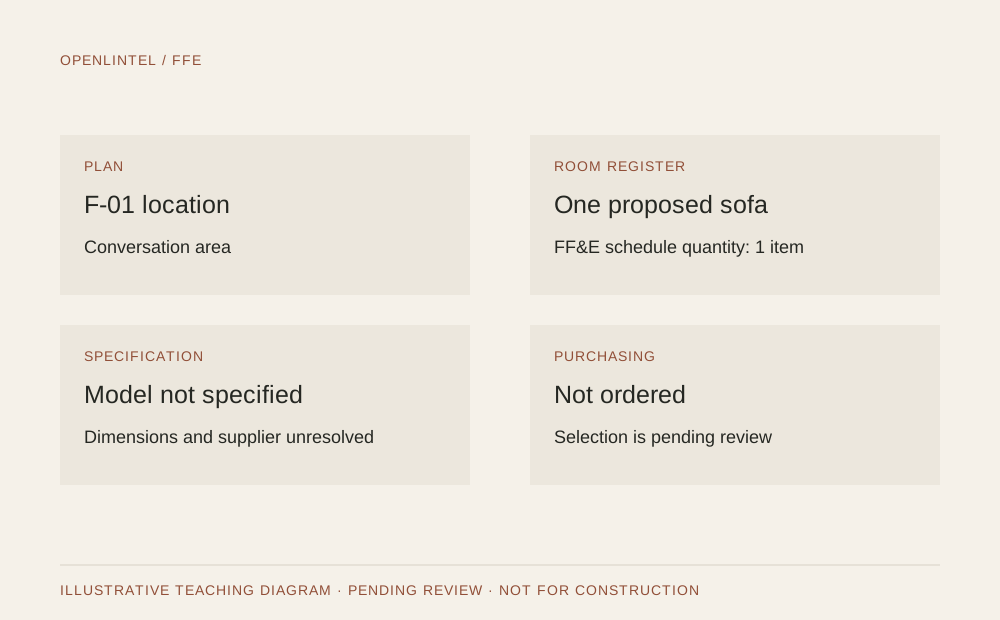
F-01 is an illustrative linen two-seat sofa in the conversation area. Its proposed quantity is one. The final model and supplier are not specified, so the schedule says pending review and not ordered.
The image helps communicate intent, but it does not supply verified dimensions, a quotation, or approval. This is why a complete-looking board must not be mistaken for an order-ready package.
- Plan reference: F-01.
- Register: one proposed item in The Window Room.
- Specification gap: final model, dimensions, and supplier.
- Purchasing state: not ordered; further review required.
Keep the reference through procurement
Once real project information is developed, the reference can connect selection review, supplier confirmation, order records, delivery, and receiving notes. Each is a different state and may have a different responsible party.
For accounting classifications, depreciation, insurance, tax, or contractual definitions, obtain appropriate professional advice. This guide addresses design-document coordination only.
Resolve the record boundary before adding products
Write down how your team uses the schedule, specification, and purchasing record. This is more useful than assuming the acronym carries an identical scope for the designer, client, accountant, and installer.
| Situation or reference | Useful record or next action |
|---|---|
| Where and how many? | Use the room/item register with explicit units. |
| Which product and attributes? | Use the specification and current source information. |
| Who can order, and has it happened? | Use a distinct purchasing decision and actual order record. |
Before you move on
- Is the project’s FF&E boundary documented?
- Do schedule items link to current product information?
- Are selection approval and purchasing status separate?
About this resource
Authored by OpenLintel with AI assistance. Examples are illustrative and have not received independent professional review. Adapt the structure to your practice and verify project-specific information. No legal agreement, regulatory compliance, or construction readiness is represented.
See the information connect
Follow the corresponding chapter of The Window Room: one illustrative brief, one selected direction, and coordinated sample references.
Explore the sample materialsDiscuss your studio’s workflow
Does this step lose information when your team moves to the next document? Discuss the coordination problem in a pilot discovery conversation. OpenLintel is in active development; this is not a hosted trial.
Request a pilot discovery conversation