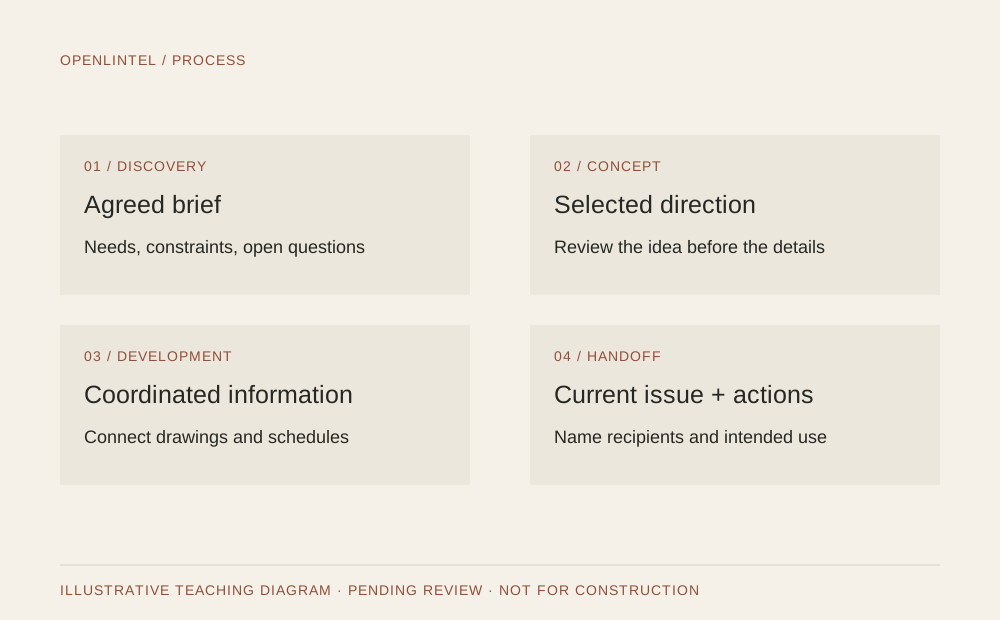
Discovery: establish the problem
Begin with the client’s needs, project constraints, and available information. Use the questionnaire to gather perspectives, the survey checklist to identify site information, and the brief to record agreed priorities. Keep conflicting needs and missing data visible.
The output is not a finished design. It is a working brief with a defined scope, known information, and follow-up actions. Review it before investing effort in a direction the client has not understood.
Concept: test a direction
Develop a spatial and visual response to the brief. Explain why it serves the intended activities rather than presenting unrelated inspiration. Compare alternatives using the same constraints and record the selected direction.
In the sample, Quiet Oak and Deep Olive are alternatives for the same room. Quiet Oak continues downstream. That selection is a narrative device showing how a decision should remain consistent through later documents.
Development: make information specific
Move from atmosphere toward dimensions, material applications, product references, and coordination questions. Drawings and schedules should describe the same decisions. Product substitutions or changed dimensions need an impact review rather than a silent update.
Architectural practice commonly distinguishes schematic design, design development, and construction documents; AIA describes those broad service phases. A residential interior engagement may group or exclude activities depending on the agreement. The resource sequence here is an adaptable teaching workflow, not a mandated service scope.
Handoff: issue a clear package
Prepare an index identifying document names, revisions, intended use, and recipients. Include unresolved items and responsibilities. A handoff is not complete because files were sent; the recipient must be able to tell which files are current and what they may be used for.
The Window Room ends in an illustrative handoff, not procurement, installation, or a completed building. A real project may continue through those activities with additional agreements and specialist responsibilities. Use the timeline to make that boundary explicit.
Define the output at each transition
Project phases are easier to interpret when the exit record is explicit. Treat the table as a teaching workflow, not a promise that every residential project uses the same scope, duration, or review sequence.
| Situation or reference | Useful record or next action |
|---|---|
| Discovery → concept | Agreed priorities and visible information requests, not an assumed complete survey. |
| Concept → development | Identified direction and separate product questions, not blanket technical approval. |
| Development → handoff | Current indexed records and open actions, not a folder labeled “final”. |
Before you move on
- Does each phase have an input, output, and review?
- Is scope defined separately from a generic process?
- Can the recipient identify the current issue and outstanding actions?
About this resource
Authored by OpenLintel with AI assistance. Examples are illustrative and have not received independent professional review. Adapt the structure to your practice and verify project-specific information. No legal agreement, regulatory compliance, or construction readiness is represented.
Authorship, review boundaries, sources, and corrections
References
See the information connect
Follow the corresponding chapter of The Window Room: one illustrative brief, one selected direction, and coordinated sample references.
Explore the sample handoffDiscuss your studio’s workflow
Does this step lose information when your team moves to the next document? Discuss the coordination problem in a pilot discovery conversation. OpenLintel is in active development; this is not a hosted trial.
Request a pilot discovery conversation