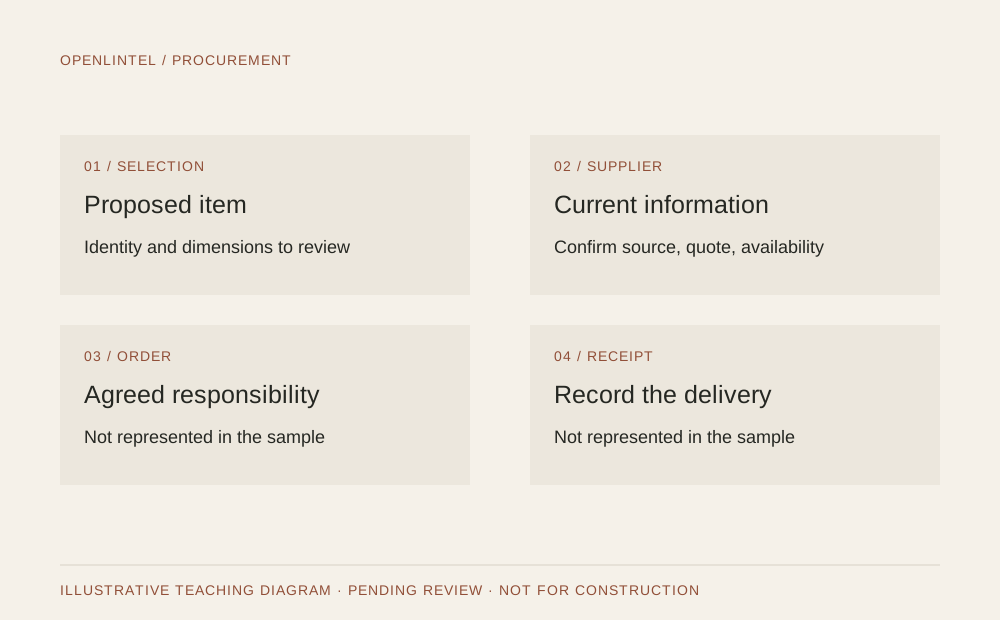
Give each decision a separate purpose
Practices use different names and responsibility structures. Agree your own terms with the project team and relevant agreements. The model here is an educational way to avoid conflating a preference, a project-specific review, and permission to spend; it does not assign legal responsibility.
| Decision | Question it answers | What it does not establish |
|---|---|---|
| Client selection | Does this option serve the agreed aesthetic or functional intent under discussion? | Verified dimensions, technical suitability, or authority for someone else to order. |
| Technical review | Has the relevant qualified party reviewed the specified issue for the stated purpose? | A blanket guarantee, unrelated specialist review, or client spending approval. |
| Purchasing approval | Is the identified party authorized to commit to the defined item and commercial basis? | That every design or technical question is resolved unless explicitly included in the process. |
Read the Window Room without upgrading its status
Quiet Oak is selected within the illustrative narrative. The actual sample drawings remain R0 and pending review. F-01 remains an unresolved sofa concept and is not ordered. These statements are compatible because they describe different parts of the workflow.
A reader should never have to infer whether “selected” means “buy it.” Keep product identity, quote evidence, dimensions, and unresolved questions alongside the relevant status. Do not replace missing information with an approval icon.
| Sample record | Accurate statement | Misleading shortcut |
|---|---|---|
| Quiet Oak direction | Selected illustrative material direction. | “Client-approved completed design.” |
| WR-01 and WR-02 | R0 illustrative drawings, pending review. | “Ready for construction.” |
| F-01 sofa | One proposed item; model not specified; not ordered. | “Approved purchase.” |
Write a decision someone can interpret later
Use a short record with the item or document reference, revision, exact question, outcome, evidence, decision-maker, and limitations. Do not fabricate a reviewer or approval date. The purpose is not to create paperwork for its own sake, but to preserve the boundaries that informal meeting notes often lose.
For an illustrative exercise, write: “F-01: compare a candidate sofa against the seating brief; no model selected; dimensions and supplier information required; owner to appoint.” It remains an open action. A real decision record should instead name the actual person and dated source once the decision occurs.
- Record what the reviewer saw, including the revision.
- State selected, rejected, or still under review with the actual conditions.
- Identify any remaining work that prevents the next intended action.
- Keep the source record in the project system; do not paste private correspondence into a public resource.
Revisit the relevant decision when the evidence changes
A changed model, dimension, finish, price, or project condition can make a prior decision incomplete for the new candidate. Check the scope of the original decision rather than either assuming it carries forward or asking for blanket reapproval of everything.
If only the visual direction was selected, a later supplier quote is a separate input. If the candidate product changes after a review, identify what the reviewer must reconsider. Preserve the previous record and link the new decision to the change instead of overwriting history.
Before you move on
- Does every approval name the actual decision and revision?
- Are selection, relevant technical review, and purchasing authority distinguishable?
- Will a changed input trigger a review of the affected decision rather than inherit a vague status?
About this resource
Authored by OpenLintel with AI assistance. Examples are illustrative and have not received independent professional review. Adapt the structure to your practice and verify project-specific information. No legal agreement, regulatory compliance, or construction readiness is represented.
See the information connect
Follow the corresponding chapter of The Window Room: one illustrative brief, one selected direction, and coordinated sample references.
Explore the sample materialsDiscuss your studio’s workflow
If a single approval label creates confusion in your studio, discuss how decisions should stay connected to their documents in a pilot discovery conversation.
Request a pilot discovery conversation