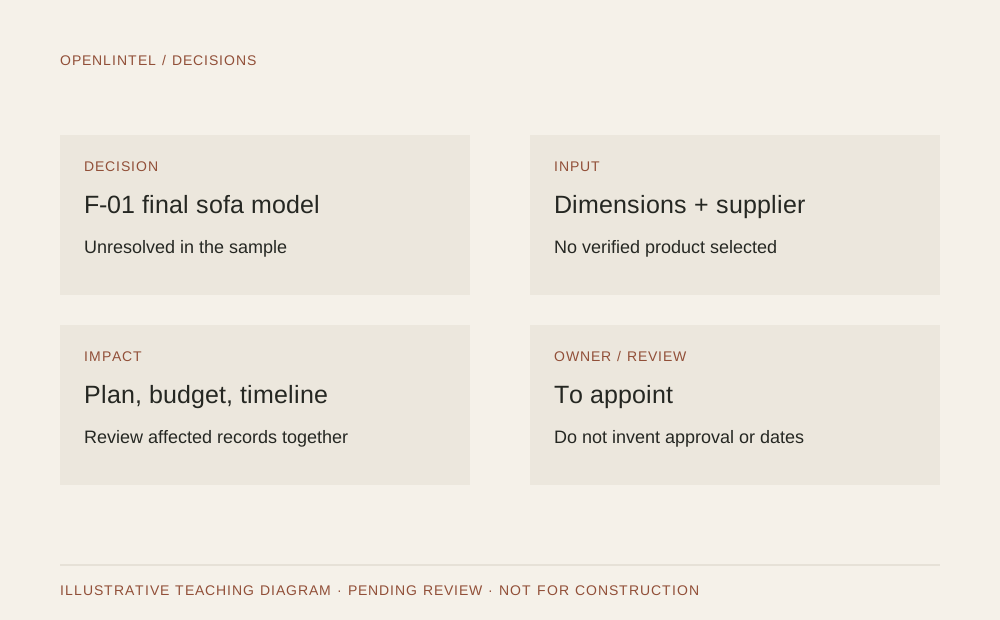
Give each decision an owner
Describe the decision in plain language, identify who provides the information, and identify who can make or confirm it. A broad task such as “finish selections” becomes more actionable when split into a specific choice and its prerequisites.
In the sample, the final F-01 sofa model remains unresolved. That is not merely a missing cell: dimensions, layout checks, supplier information, and budget discussion may depend on it. A real project needs an assigned owner and review date.
Separate review states
Proposed, under review, selected, technically coordinated, and ordered are not synonyms. Use status labels that match the record’s purpose and avoid a single “done” checkbox that hides the remaining work.
Quiet Oak is the selected illustrative concept, but the drawings still say pending review and the furniture has not been ordered. Those statements are compatible because they describe different decisions.
Keep a usable revision trail
When a decision changes, record what changed, why, who reviewed it, and which documents are affected. Preserve the previous issue in your project system and make the current issue easy to identify.
Do not rename a file “final” and rely on that word forever. A dated or numbered issue register with an explicit purpose is easier to interpret, especially when drawings, schedules, and presentations move at different speeds.
- Decision or change request.
- Required information and owner.
- Affected drawings, schedule rows, budget, and timeline.
- Review outcome and current issue reference.
Make the next action obvious
A handoff note should identify the package, its intended use, and outstanding actions. Ask whether the recipient has enough information for the next agreed task, not merely whether they received the files.
OpenLintel’s public sample demonstrates a connected narrative; it is not a live project-management service or evidence of actual client approvals. The downloadable timeline and scope outline can help structure your own records without implying a hosted workflow.
Make an open decision actionable
A decision backlog should describe what blocks progress, not just who has an overdue task. For F-01, distinguish obtaining product information, reviewing the option, and deciding whether purchasing may proceed.
| Situation or reference | Useful record or next action |
|---|---|
| Question | Which sofa candidate should be developed for F-01? |
| Required input | Candidate identity, dimensions, source, cost information, and relevant reviews. |
| Current sample outcome | Unresolved; no actual owner, deadline, or purchasing authority is represented. |
Before you move on
- Does every unresolved decision have an owner?
- Do statuses describe the right kind of approval?
- Can the next recipient identify the current issue and required action?
About this resource
Authored by OpenLintel with AI assistance. Examples are illustrative and have not received independent professional review. Adapt the structure to your practice and verify project-specific information. No legal agreement, regulatory compliance, or construction readiness is represented.
See the information connect
Follow the corresponding chapter of The Window Room: one illustrative brief, one selected direction, and coordinated sample references.
Explore the sample handoffDiscuss your studio’s workflow
Does this step lose information when your team moves to the next document? Discuss the coordination problem in a pilot discovery conversation. OpenLintel is in active development; this is not a hosted trial.
Request a pilot discovery conversation